Stones on the Matzevah by Joanna Preizner is a unique book in many respects. Not only because of its cognitive qualities, excellent workshop, which the author operates with full freedom, or extensive documentary facilities. What first catches the reader’s attention is Joanna Preizner’s passion for research, her deep involvement, not only intellectual, but also emotional, empathetic ability to penetrate the reality of the past, empirically inaccessible to her. The author managed to achieve a goal that seems impossible to achieve. She combined the objectivity of the researcher, for whom facts, documents and testimonies are important, with the subjectivism of the writer, who gets inside the world of their characters and is able to convey it „from the inside”. Joanna Preizner writes today, from the perspective of 2011, but at the same time she finds herself „there”, in the tragic forties.
The coherence of the concept harmonizes with the diversity of the research material in an interesting way. Preizner writes about films that were made over the course of sixty years. The first of them is Border Street (1949) by Aleksander Ford, the last is Joanna (2010) by Feliks Falk. Among these films there are outstanding works, but also mediocre and unsuccessful ones. Joanna Preizner interprets films made in various poetics, styles and genres, which, apart from the theme, seem to divide everything, not unite. However, the author has chosen a point of view and a method of analysis that allow this multifaceted diversity not so much to be reduced to a common denominator (this was not the intention), but to make a logical, coherent whole. Joanna Preizner’s book is not a set of twenty separate texts, which was dictated by the material, but one statement, which was determined by the way it was written. The book will fully satisfy the historian, but also every reader interested in the subject, for whom reading it will be a fascinating intellectual adventure.
Professor Alicja Helman
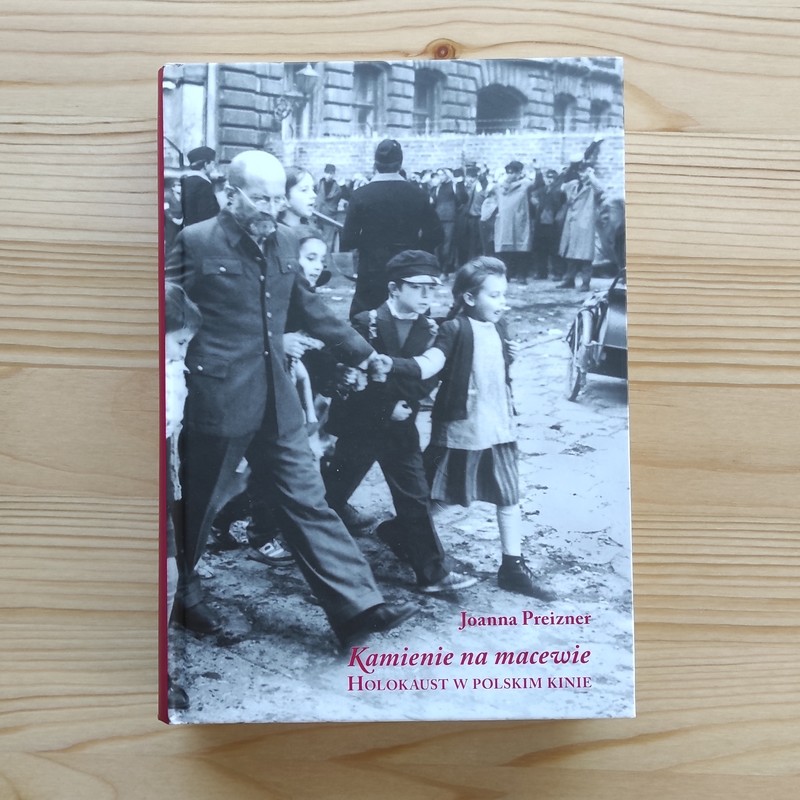
Kamienie na macewie. Holokaust w polskim kinie, 2012
Kamienie na macewie Joanny Preizner to książka pod wieloma względami wyjątkowa. Nie tylko ze względu na jej walory poznawcze, znakomity warsztat, którym z pełną swobodą operuje autorka, ani rozbudowane zaplecze dokumentalne. Tym, co w pierwszej kolejności przykuwa uwagę czytelnika, jest pasja badawcza Joanny Preizner, jej głębokie zaangażowanie nie tylko intelektualne, lecz także emocjonalne, empatyczna zdolność wnikania w minioną rzeczywistość, empirycznie dla niej przecież niedostępną. Autorce udało się zrealizować cel, który wydaje się niemożliwy do osiągnięcia. Połączyła obiektywizm badacza, dla którego ważne są fakty, dokumenty, świadectwa, z subiektywizmem pisarza, który wnika w świat swoich bohaterów i potrafi go oddać niejako „od wewnątrz”. Joanna Preizner pisze dziś, z perspektywy 2011 roku, ale równocześnie odnajduje się „tam”, w tragicznych latach czterdziestych.
Spójność koncepcji w interesujący sposób współgra z różnorodnością materiału badawczego. Preizner pisze o filmach, które powstawały na przestrzeni sześćdziesięciu lat. Pierwszym z nich jest Ulica Graniczna (1949) Aleksandra Forda, ostatnim Joanna (2010) Feliksa Falka. Są wśród tych filmów dzieła wybitne, ale też przeciętne i nieudane. Joanna Preizner interpretuje filmy utrzymane w różnych poetykach, stylach i gatunkach, które, prócz tematu, zdaje się wszystko dzielić, a nie łączyć. Autorka wybrała jednak metodę, punkt widzenia i sposób analizy, które pozwalają tę wielokształtną różnorodność nie tyle sprowadzić do wspólnego mianownika (nie taki był zamysł), co uczynić logiczną, koherentną całością. Książka Joanny Preizner to nie dwadzieścia osobnych tekstów, co dyktował materiał, lecz jedna wypowiedź, o czym zdecydował sposób jej napisania. W pełni usatysfakcjonuje historyka, ale też i każdego zainteresowanego tematem czytelnika, dla którego jej lektura będzie pasjonującą przygodą intelektualną.
Prof. dr hab. Alicja Helman