In the fourth volume Gefilte film. Jewish Themes in Cinema the reader will find texts by Polish film experts. Experienced academics and university graduates discuss works that are diverse and very different from each other: films made within the framework of genre cinema and being examples of auteur cinema; originated in Europe and overseas; feature and documentary; contemporary and from a few decades ago; talking about the Holocaust, but also about Jewish tradition and culture; and finally, those that tell about the formation of Israel.
It seems obvious how many different perspectives the history and culture of Jews got in cinema, but this knowledge remains vague until you get to know such a study as the three-volume Gefilte film series published in Poland. The originator and editor of the series, Joanna Preizner, announces that this fourth volume will be the last one. That adds a reason to get to know its content. Of the masterpieces fundamental to the subject, and omitted form the previous volumes, only an analysis of Jan Němec’s Diamonds of the Night can be found here. Instead, the reader gets an overview of the Jewish issue in The Last Stage by Wanda Jakubowska and The Wedding by Andrzej Wajda – both described many times from a different angle; there is a founding myth of the state of Israel in the Exodus by Otto Preminger, unknown in Poland; there is a reference to Jewish mythology in films as forgotten as The Emperor and the Golem by Martin Frič and Daydream by Janusz Majewski; shows in a new light films still remembered, such as Aimée and Jaguar by Max Färberböck, Everything is an illumination by Liev Schreiber, or the documentaries by Marcel and Paweł Łoziński… The Gefilte film series may close with this volume, but the theme remains alive, open to future films and new interpretations of the old ones.
Professor Tadeusz Lubelski
*
This is probably the last volume in the series Gefilte film. Jewish themes in the cinema. When a few years ago I sent a letter to Polish film experts with a proposal to participate in the project, I was convinced that at best one comprehensive collection would be created. Meanwhile, I present the reader with the fourth volume. The topic that is so dear to me turned out to be important and inspiring also for a large part of my environment.
Over the past four years, and using a variety of methodologies, we have jointly explored multiple film contexts in which Jewish themes have different places and functions. We looked at films about Jews made by non-Jews or by directors of Jewish origin but made within the framework of European cinematographies or the American one. We told about the authors of the literary prototypes of the discussed works and the creators of their screen visions. We revealed hidden meanings. There were many of them – some, discovered while working on the text, surprised us.
Working on Gefilte film was both a pleasure and an adventure for us. I would like to thank the authors of all texts for the trust they placed in me by entrusting their analyses, and many of them also for the friendship that we have managed to build over the past years. Readers – for the fact that they reached for more books. Maybe someday, when new films with Jewish themes appear or new suggestions for reading the old ones, I will offer them to read the fifth volume?
Joanna Preizner (from the introduction)
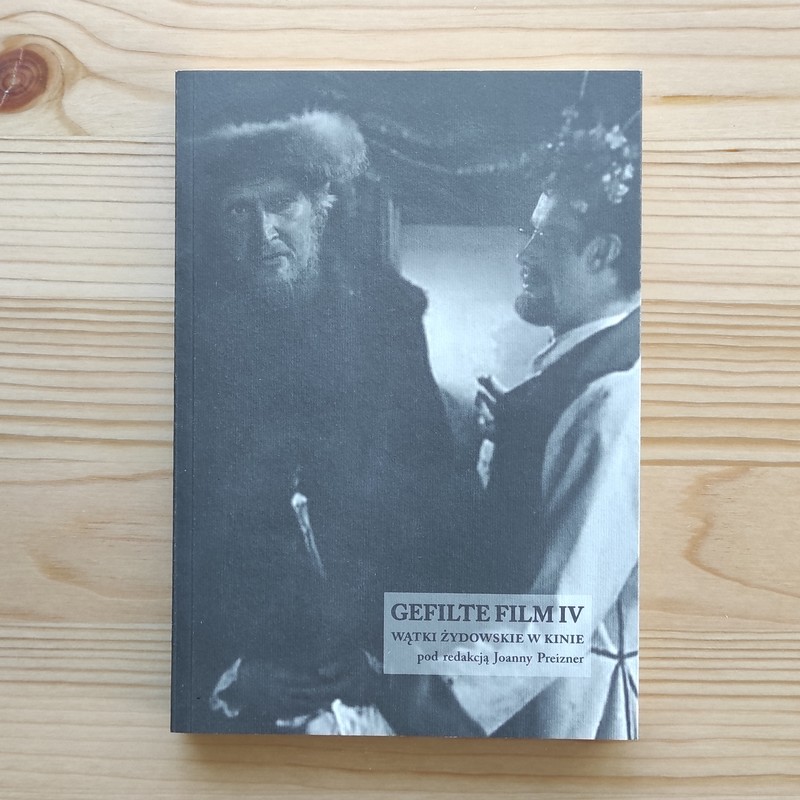
Gefilte film IV. Wątki żydowskie w kinie, 2013
W IV tomie „Gefilte film. Wątki żydowskie w kinie” Czytelnik znajdzie teksty polskich filmoznawców. Doświadczeni pracownicy nauki i jej adepci omawiają dzieła różnorodne i bardzo od siebie odmienne: filmy nakręcone w ramach kina gatunków i będące przykładami kina autorskiego; powstałe w Europie i za oceanem; fabularne i dokumentalne; współczesne i sprzed kilku dekad; mówiące o Zagładzie, ale i żydowskiej tradycji i kulturze; wreszcie takie, które opowiadają o powstaniu Izraela.
Niby wiadomo, jak wiele różnorodnych ujęć znalazła w kinie historia i kultura Żydów, wiedza ta pozostaje jednak mglista, póki nie pozna się takiego opracowania, jakim na naszym gruncie stał się trzytomowy cykl Gefilte film. Inicjatorka i redaktorka cyklu, Joanna Preizner, zapowiada, że niniejszy czwarty tom stanie się jego zamknięciem. Tym bardziej warto poznać jego zawartość. Z fundamentalnych dla tematu, a pominiętych w tomach poprzednich arcydzieł, pozostała tu wprawdzie już tylko analiza Diamentów nocy Jana Němeca. Jest to za to omówienie kwestii żydowskiej w wielokrotnie opisywanych pod innym kątem Ostatnim etapie Wandy Jakubowskiej i Weselu Andrzeja Wajdy, jest mit założycielski państwa Izrael w nieznanym u nas Exodusie Otto Premingera, jest nawiązanie do żydowskiej mitologii w filmach tak zapomnianych, jak Cesarski piekarz Martina Friča i Mrzonka Janusza Majewskiego, jest ukazanie w nowym świetle filmów nadal pamiętanych, jak Aimée i Jaguar Maxa Färberböcka, Wszystko jest iluminacją Lieva Schreibera, czy dokumenty Marcela i Pawła Łozińskich… Cykl Gefilte film może się wraz z tym tomem zamknie, ale temat pozostaje żywy, otwarty na przyszłe filmy i wciąż nowe odczytania dawnych.
Prof. dr hab. Tadeusz Lubelski
*
To już prawdopodobnie ostatni tom z serii Gefilte film. Wątki żydowskie w kinie. Kiedy kilka lat temu rozesłałam wśród polskich filmoznawców list z propozycją udziału w projekcie, byłam przekonana, że w najlepszym wypadku powstanie jeden obszerny zbiór. Tymczasem oddaję do rąk Czytelnika tom czwarty. Temat, który jest mi tak bliski, okazał się ważny i inspirujący także dla sporej części mojego środowiska.
Przez ostatnie cztery lata, posługując się rozmaitymi metodologiami, wspólnie odkrywaliśmy wielorakie konteksty filmów, w których żydowskim motywom przeznaczono różne miejsca i funkcje. Przyglądaliśmy się filmom o Żydach zrealizowanych przez nie-Żydów lub reżyserów żydowskiego pochodzenia, ale tworzących w ramach kinematografii europejskich lub amerykańskiej. Opowiadaliśmy o autorach literackich pierwowzorów omawianych dzieł i twórcach ich ekranowych wizji. Odsłanialiśmy ukryte znaczenia. Było ich wiele – niektóre, odkryte w trakcie pracy nad tekstem, zaskakiwały nas samych.
Praca nad Gefilte film była dla nas przyjemnością i przygodą zarazem. Autorom wszystkich tekstów dziękuję za zaufanie, którym mnie obdarzyli powierzając swoje analizy, a wielu z nich także za przyjaźń, którą udało nam się w ciągu minionych lat zbudować. Czytelnikom – za to, że sięgali po kolejne książki. Może kiedyś, kiedy pojawią się nowe filmy zawierające wątki żydowskie lub nowe propozycje odczytania starych, zaproponuję im lekturę tomu piątego?
Joanna Preizner (ze wstępu)