I read the previous volume of Gefilte film. Jewish themes in the cinema, with great interest. The next one is even more interesting. The sketches that make up it speak not only about cinema, not only about the Holocaust in cinema, but about our perception of these events: about the temptations to tame them, about helplessness, about the courage to take up impossible topics, and finally about the mythical power of this unique experience for humanity. The texts are not only proof of the erudition of their authors – written with passion, from a personal perspective, they are a testimony to the deeply lived reception of the discussed films.
I thought I knew almost everything about it. Reading the volume edited by Joanna Preizner showed me that I was wrong.
Agnieszka Holland
*
The series Gefilte film. Jewish themes in cinema – invented and edited by Joanna Preizner, PhD, – is a pioneering achievement in Polish film studies. Recognized authors from academic circles present their interpretations of outstanding film works produced in different times and countries, concerning the history and traditions of the Jews.
The third volume of Gefilte film familiarizes Polish readers with films about the nation living in the diaspora for centuries, problems related to Jewish identity, the wartime Holocaust, the Survivor syndrome, the fate of heroes involved in various life conflicts. All articles present a high scientific level, interpret and explain films, place them in significant cultural contexts, introduce the audience to the complex existential problems of the protagonists and – last but not least – teach understanding and tolerance for otherness.
Professor Grażyna Stachówna
*
I miss their presence. They’ve been gone for so many years and they’ll never be here again the way they used to be. I was born when they hadn’t walked the streets of Poland for a long time. Most of them were swallowed up by the Holocaust, and those who survived and tried to build a new life on our – theirs and mine – land were expelled from Poland two decades later. I heard the first word in Yiddish as a teenager, and then I saw the first Jewish cemetery. Actually, it was not a Jewish cemetery, but a strange, uneven meadow, marked with broken Matzevahs.
By writing and talking about Jews, their history, religion and culture, I try to undo what happened. Not the Holocaust and Exile – because it is impossible to undo them. I would like to undo the Oblivion.
The next volume of Gefilte film series shows that I am not the only one.
Joanna Preizner (from the introduction)
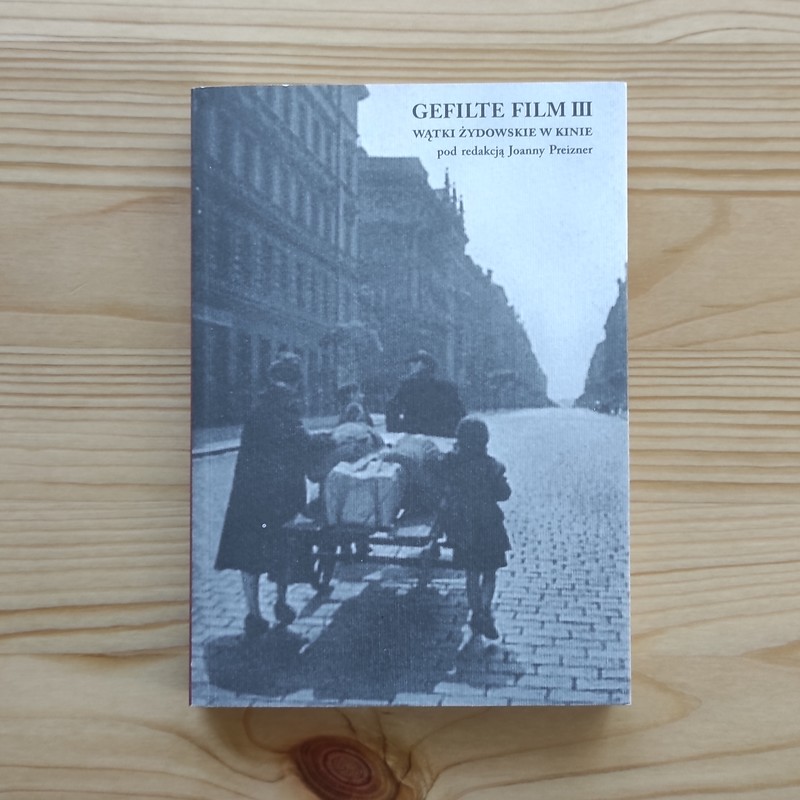
Gefilte film III. Wątki żydowskie w kinie, 2010
Z wielkim zainteresowaniem przeczytałam poprzedni tom Gefilte film. Wątki żydowskie w kinie – a kolejny jest jeszcze ciekawszy. Składające się na niego szkice mówią nie tylko o kinie, nie tylko o Holokauście w kinie, ale o naszej percepcji tych wydarzeń: o pokusach ich oswojenia, o bezradności, o odwadze podejmowania tematów niemożliwych, wreszcie o mitycznej sile tego szczególnego doświadczenia ludzkości. Teksty są nie tylko dowodem erudycji ich Autorów – napisane z pasją, z osobistej perspektywy, są świadectwem głęboko przeżytego odbioru omawianych filmów.
Wydawało mi się, że wiem na ten temat niemal wszystko. Lektura redagowanego przez Joannę Preizner tomu pokazała mi, że się myliłam.
Agnieszka Holland
*
Seria Gefilte film. Wątki żydowskie w kinie – wymyślona i redagowana przez dr Joannę Preizner – jest na gruncie polskiego filmoznawstwa osiągnięciem pionierskim. Uznani autorzy z kręgów akademickich przedstawiają swoje interpretacje wybitnych dzieł filmowych wyprodukowanych w różnych czasach i krajach, a dotyczących historii i tradycji Żydów.
Trzeci już tom Gefilte film…oswaja w świadomości polskich czytelników filmy opowiadające o narodzie przez wieki żyjącym w diasporze, problemach związanych z żydowską tożsamością, wojenną Zagładą, syndromem Ocalonego, o losach bohaterów uwikłanych w różnorodne konflikty życiowe. Wszystkie artykuły prezentują wysoki poziom naukowy, interpretują i objaśniają filmy, wpisują je w znaczące konteksty kulturowe, przybliżają odbiorcom skomplikowane problemy egzystencjalne protagonistów oraz – last but not least – uczą zrozumienia i tolerancji dla inności.
prof. dr hab. Grażyna Stachówna
*
Brakuje mi ich obecności. Tyle lat ich nie ma i nigdy już nie będą tu tak, jak byli kiedyś. Urodziłam się, kiedy od dawna nie chodzili po polskich ulicach. Większość pochłonęła Zagłada, a tych, którzy przeżyli i próbowali na naszej – ich i mojej – ziemi budować nowe życie, wygnano z Polski dwie dekady później. Pierwsze słowo w jidysz usłyszałam jako nastolatka, wtedy też zobaczyłam pierwszy kirkut. To właściwie nie był kirkut, tylko dziwna, nierówna łąką, gdzieniegdzie poznaczona połamanymi macewami.
Pisząc i mówiąc o nich próbuję odczarować to, co się stało. Nie Zagładę i Wygnanie – bo tego cofnąć nie sposób. Chciałabym odczarować Niepamięć.
Kolejny tom serii Gefilte film pokazuje, że nie jestem jedyna.
Dr Joanna Preizner (ze wstępu)